



Travertine Pool Surround
Unfilled travertine outdoors, where its texture provides grip when wet and its light colour keeps the surface cooler underfoot.
Unfilled travertine outdoors, where its texture provides grip when wet and its light colour keeps the surface cooler underfoot.

Granite finished with a leathered surface. The texture keeps the depth of colour that honing would wash out, while hiding fingerprints and water marks.

A quartzite island with a waterfall edge. Quartzite gives marble-like veining with far more resistance to acid and wear, which is why it keeps appearing in working kitchens.
Stacked stone around a fireplace, where the depth and shadow of real stone does something printed tile cannot imitate.

Limestone honed rather than polished, which keeps the surface matte and gives some grip underfoot. Limestone is porous, so sealing is part of the job, not an afterthought.
Cut stone applied as wall cladding. Weight is the constraint: the substrate and the adhesive have to be specified for the actual material, not assumed from tile.
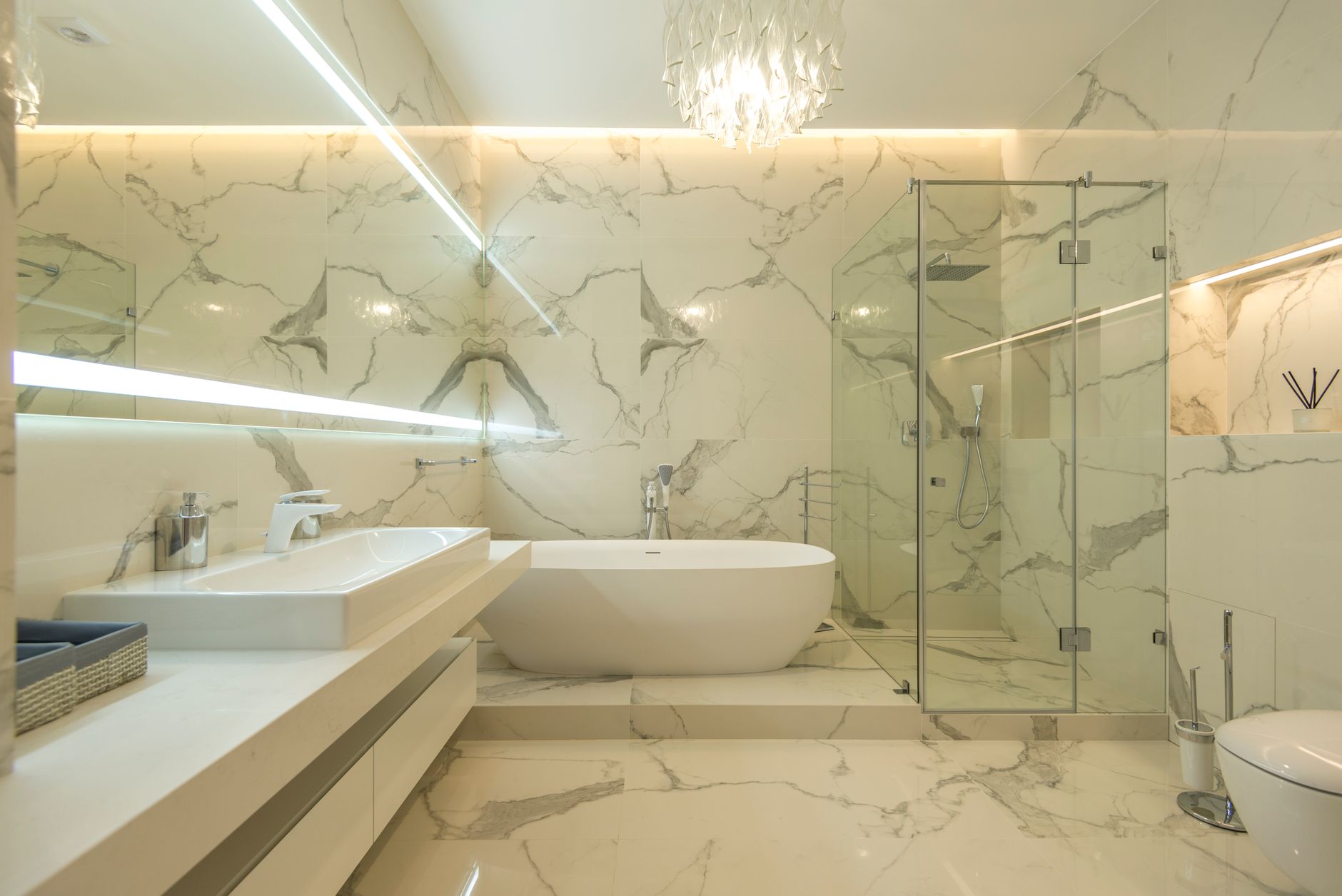
Large-format marble laid in an entry hall. A flat substrate matters more here than anywhere else, because big pieces show every dip in the floor.

Two sequential slabs opened like a book so the veining mirrors across the join. It only works when the slabs come from the same block, which is why they have to be reserved together.